Cardio
Jump Rope
The Jump Rope is a cardio exercise with no equipment for your conditioning. Share of the load in the Zulta muscle model: calves (gastrocnemius) 30%, calves (soleus) 26% and quads (vastus lateralis) 8%.
Also known as: skipping, springtouw, touwtjespringen
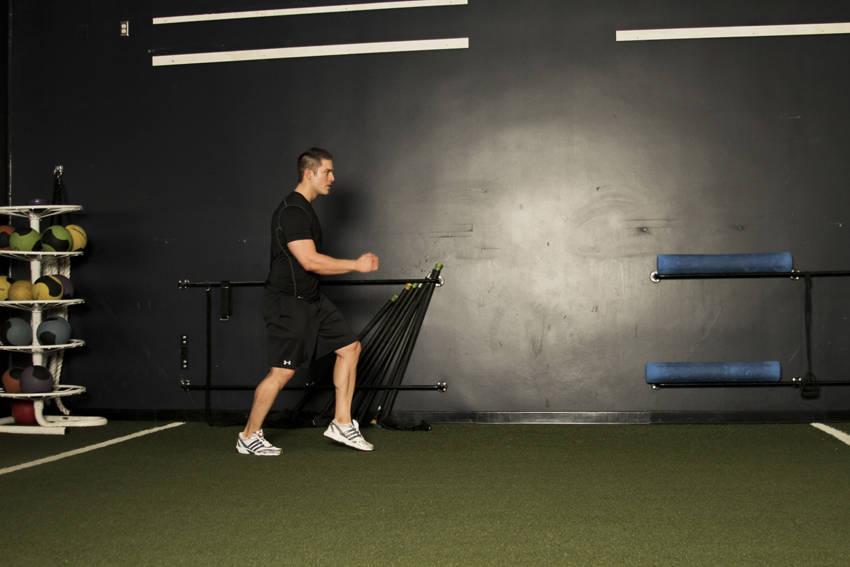
How to do it
- Size the rope so the handles reach about the armpits when you stand on its middle.
- Hold the handles at hip height, elbows close to your sides, rope behind your heels.
- Swing the rope over your head with a small circle of the wrists.
- Hop just high enough to clear the rope, landing on the balls of the feet.
- Keep a steady rhythm for 30 to 60 seconds at a time, breathing evenly.
Tips
- Keep the jumps low, about 2 to 3 cm off the floor.
- Relax the shoulders and let the wrists do the turning.
Common mistakes
- Jumping too high and landing heavily.
- Swinging the rope with big arm circles.
- Landing on the heels.
Muscles worked by the Jump Rope
Share per muscle in the Zulta muscle model. The model spreads the load of one rep over 40 muscles, based on EMG and biomechanics research.
Small continuous hops off the balls of the feet: calves do most of the work, the quads and glutes absorb each landing, the forearms turn the rope.
Jump Rope alternatives
Different equipment
Similar exercises
Frequently asked questions
What muscles does the Jump Rope work?
Mainly the calves (gastrocnemius) and calves (soleus). The quads (vastus lateralis) and quads (vastus medialis) assist.
Is the Jump Rope good for beginners?
Yes. The Jump Rope is rated beginner in the Zulta library: the technique is easy to learn with a light weight.
What is a good alternative to the Jump Rope?
For example the Double Under, Jumping Jack and High Knees. They train mostly the same muscles, some with different equipment.
Log your sets in Zulta
Zulta tracks your sets, weights and muscle load next to your running, riding or Hyrox training. The app opens soon.