Abs
Plank
The Plank is a strength exercise with no equipment for your abs. Share of the load in the Zulta muscle model: upper abs 26%, lower abs 24% and obliques 20%.
Also known as: planken
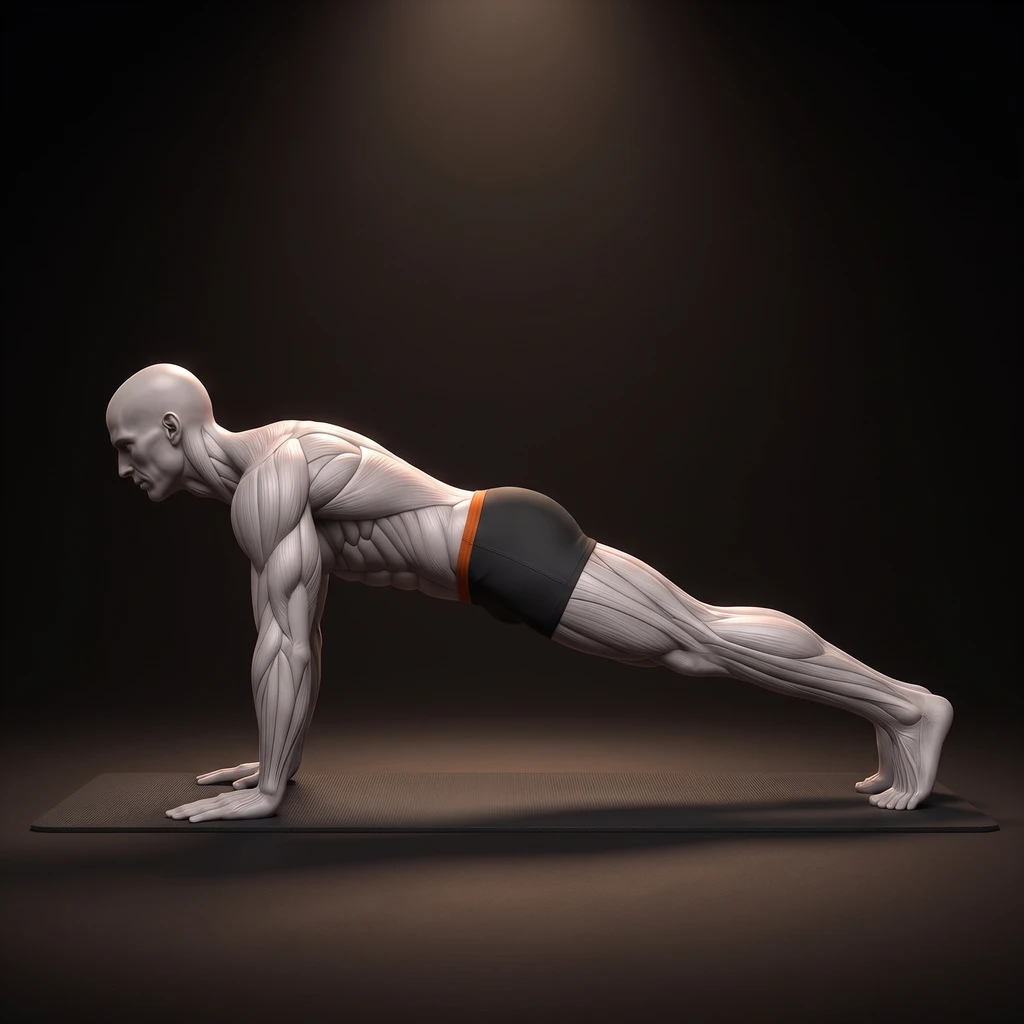
How to do it
- Place your hands on the floor under your shoulders with the arms straight.
- Step the feet back until the body is straight from head to heels.
- Brace the abs, squeeze the glutes and keep the hips level.
- Hold for 20 to 60 seconds, breathing slowly and steadily.
- Lower the knees to the floor to finish.
Tips
- Push the floor away so the shoulder blades do not sink together.
- Tuck the pelvis slightly to keep the lower back from sagging.
Common mistakes
- Letting the hips drop toward the floor.
- Locking the elbows hard and hanging on the joints.
- Holding the breath.
Muscles worked by the Plank
Share per muscle in the Zulta muscle model. The model spreads the load of one rep over 40 muscles, based on EMG and biomechanics research.
Holding the body straight against gravity is anti-extension: rectus abdominis and the obliques brace, with the shoulders, glutes and hip flexors holding the position.
Plank alternatives
Same equipment
Make it harder
Similar exercises
Frequently asked questions
What muscles does the Plank work?
Mainly the upper abs and lower abs. The obliques assist.
Is the Plank good for beginners?
Yes. The Plank is rated beginner in the Zulta library: the technique is easy to learn with a light weight.
What is a good alternative to the Plank?
For example the Forearm Plank, RKC Plank and Bear Crawl. They train mostly the same muscles.
How do you make the Plank harder?
Add weight or reps, or move on to the Hollow Body Hold and V-Up Hold.
Sources
- McGill 2010, Strength Cond J 32(3):33-46 (core training)
Log your sets in Zulta
Zulta tracks your sets, weights and muscle load next to your running, riding or Hyrox training. The app opens soon.