Forearms
Plate Pinch
The Plate Pinch is a strength exercise with a weight plate for your forearms. Share of the load in the Zulta muscle model: forearm flexors 78% and forearm extensors 18%.
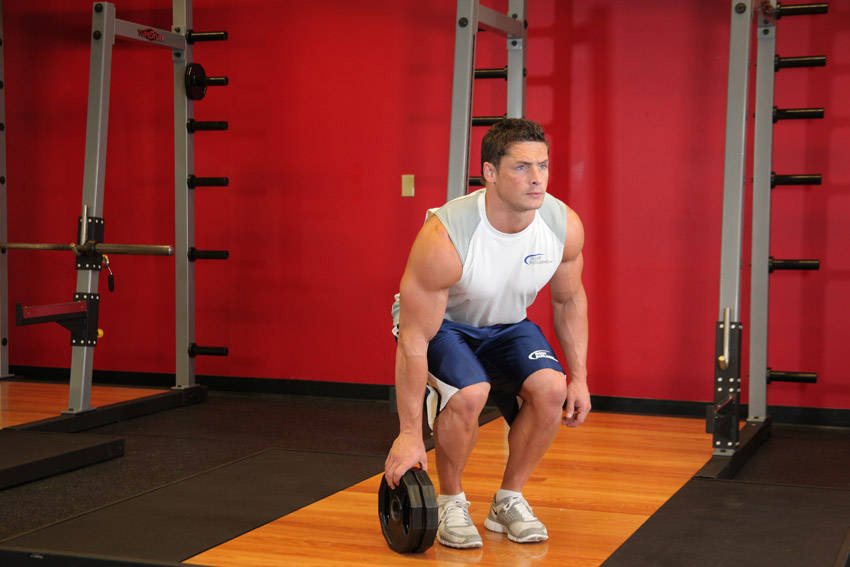
How to do it
- Place two equal plates together with the smooth sides facing out, one pair for each hand.
- Pinch each pair at the top rim with the fingers on one side and the thumb on the other.
- Lift the plates from the floor and stand tall with the arms at your sides.
- Hold for 20 to 40 seconds, breathing steadily.
- Lower the plates to the floor under control.
Tips
- Keep the fingers straight and press through the whole length of the thumb.
- Chalk the hands to stop the smooth plates from slipping.
Common mistakes
- Curling the fingers around the rim so it turns into a hook grip.
- Letting the plates drop onto the feet when the grip fails.
Muscles worked by the Plate Pinch
Share per muscle in the Zulta muscle model. The model spreads the load of one rep over 40 muscles, based on EMG and biomechanics research.
Pinching or crushing without hanging is forearm only. Hanging or pinching a load is an isometric grip: the finger flexors do the work, the extensors co-contract, and in a hang the lats and lower traps keep the shoulder packed.
Plate Pinch alternatives
Different equipment
Easier
No equipment
Make it harder
Make it easier
Frequently asked questions
What muscles does the Plate Pinch work?
Mainly the forearm flexors. The forearm extensors assist.
Is the Plate Pinch good for beginners?
The Plate Pinch is rated intermediate. If you are new, learn the Rice Bucket first and build up from there.
What is a good alternative to the Plate Pinch?
For example the Fat Grip Hold, Two Hand Pinch and One Arm Bar Hang. They train mostly the same muscles, some with different equipment.
How do you make the Plate Pinch harder?
Add weight or reps, or move on to the One Arm Bar Hang.
Log your sets in Zulta
Zulta tracks your sets, weights and muscle load next to your running, riding or Hyrox training. The app opens soon.