Cardio
Running
The Running is a cardio exercise with no equipment for your conditioning. Share of the load in the Zulta muscle model: gluteus maximus 16%, quads (vastus lateralis) 14% and calves (gastrocnemius) 12%.
Also known as: hardlopen
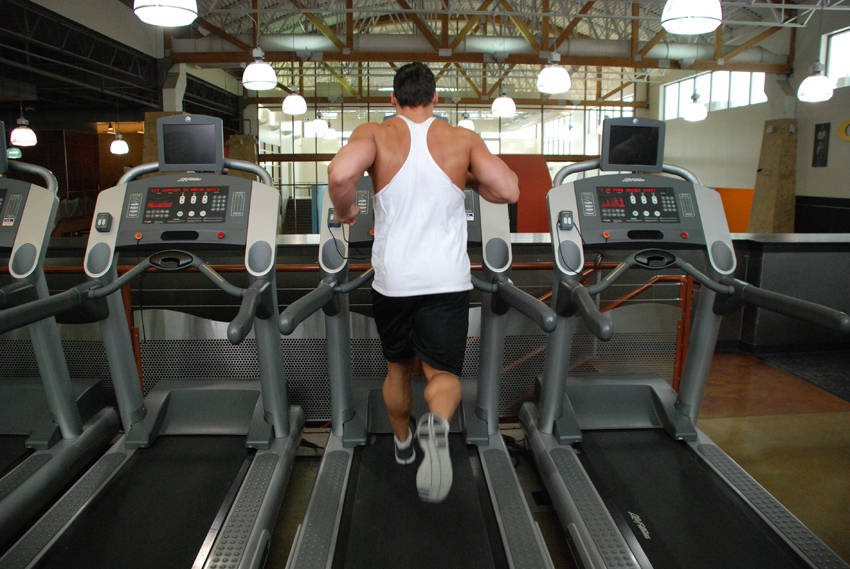
How to do it
- Warm up with 5 minutes of brisk walking or easy jogging.
- Run tall with a slight forward lean from the ankles and relaxed shoulders.
- Land with the foot close to under your hips, not far out in front.
- Swing the arms front to back with the elbows bent about 90 degrees.
- Hold a pace you can sustain for the planned time or distance, then walk to cool down.
Tips
- Aim for quick, light steps, around 160 to 180 per minute.
- Most runs should be easy enough that you can talk in short sentences.
Common mistakes
- Overstriding and landing hard on the heel.
- Crossing the arms over the chest.
- Starting too fast and fading early.
Muscles worked by the Running
Share per muscle in the Zulta muscle model. The model spreads the load of one rep over 40 muscles, based on EMG and biomechanics research.
Gait: glutes and quads absorb and extend at each stance, the calves push off, the hamstrings and hip flexors swing the leg.
Running alternatives
Same equipment
Different equipment
Frequently asked questions
What muscles does the Running work?
Mainly the gluteus maximus, quads (vastus lateralis), calves (gastrocnemius) and calves (soleus). The quads (vastus medialis), hamstrings (biceps femoris), quads (rectus femoris) and hamstrings (semitendinosus/-membranosus) assist.
Is the Running good for beginners?
Yes. The Running is rated beginner in the Zulta library: the technique is easy to learn with a light weight.
What is a good alternative to the Running?
For example the Air Runner, Treadmill Run and Treadmill Walk. They train mostly the same muscles, some with different equipment.
Log your sets in Zulta
Zulta tracks your sets, weights and muscle load next to your running, riding or Hyrox training. The app opens soon.