Abs
Russian Twist
The Russian Twist is a strength exercise with no equipment for your abs. Share of the load in the Zulta muscle model: obliques 49%, upper abs 12% and lower abs 10%.
Also known as: seated russian twist
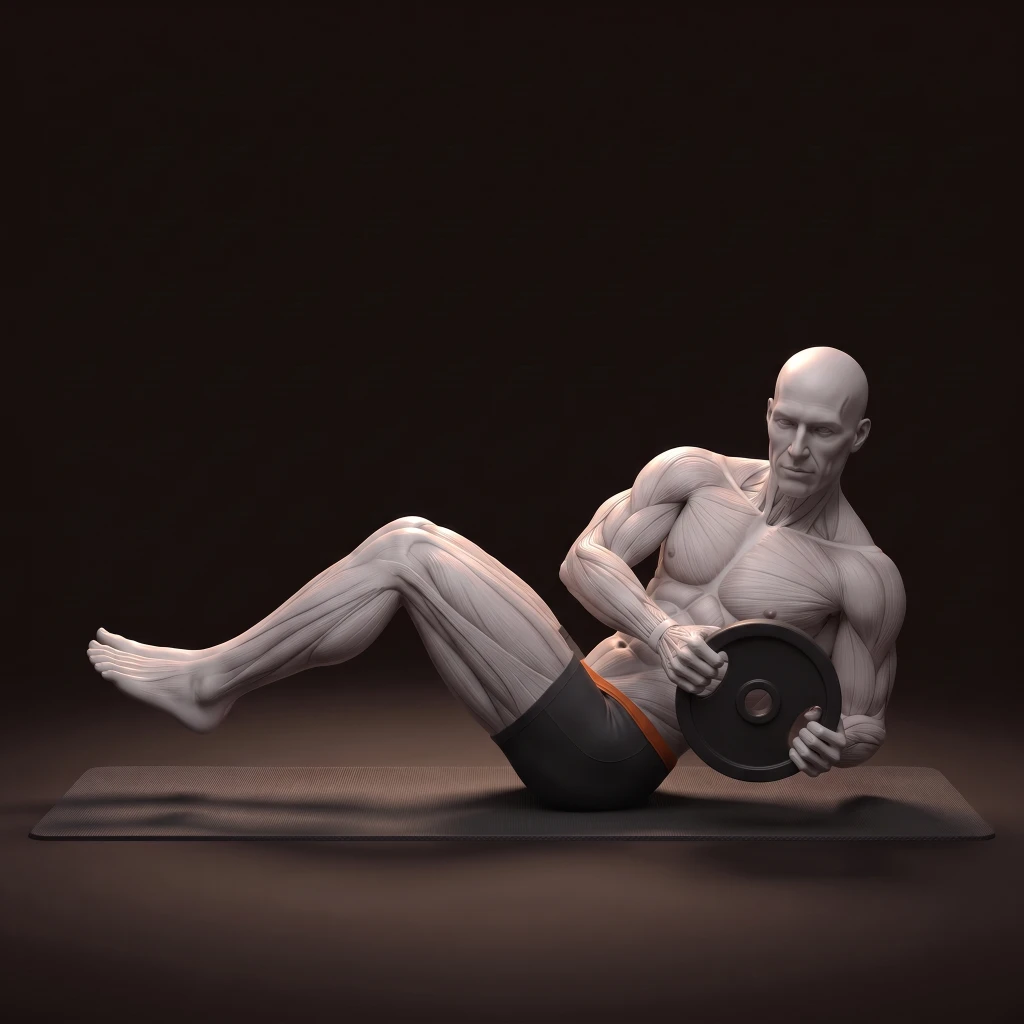
How to do it
- Sit on a mat with knees bent and feet on the floor.
- Lean back until the torso is about 45 degrees from the floor and clasp the hands in front of the chest.
- Lift the feet slightly off the floor if you can keep the back long.
- Rotate the torso to bring the hands beside one hip.
- Rotate to the other side and keep alternating at a steady pace.
Tips
- Turn the ribcage, not just the hands.
- Breathe out on each turn.
Common mistakes
- Rounding the lower back.
- Swinging the arms while the shoulders stay square.
- Rocking back and forth to keep the feet up.
Muscles worked by the Russian Twist
Share per muscle in the Zulta muscle model. The model spreads the load of one rep over 40 muscles, based on EMG and biomechanics research.
Seated and leaning back, the hip flexors hold the V. Turning the trunk against load trains the obliques as rotators, with the hips and shoulders transferring the force.
Russian Twist alternatives
Different equipment
Easier
Make it harder
Make it easier
Frequently asked questions
What muscles does the Russian Twist work?
Mainly the obliques. The upper abs and lower abs assist.
Is the Russian Twist good for beginners?
The Russian Twist is rated intermediate. If you are new, learn the Cable Woodchop first and build up from there.
What is a good alternative to the Russian Twist?
For example the Decline Bench Russian Twist, Medicine Ball Russian Twist and Weighted Russian Twist. They train mostly the same muscles, some with different equipment.
How do you make the Russian Twist harder?
Add weight or reps, or move on to the Decline Bench Russian Twist and Medicine Ball Russian Twist.
Log your sets in Zulta
Zulta tracks your sets, weights and muscle load next to your running, riding or Hyrox training. The app opens soon.