Cardio
Elliptical
The Elliptical is a cardio exercise on a machine for your conditioning. Share of the load in the Zulta muscle model: gluteus maximus 15%, quads (vastus lateralis) 15% and quads (vastus medialis) 11%.
Also known as: crosstrainer
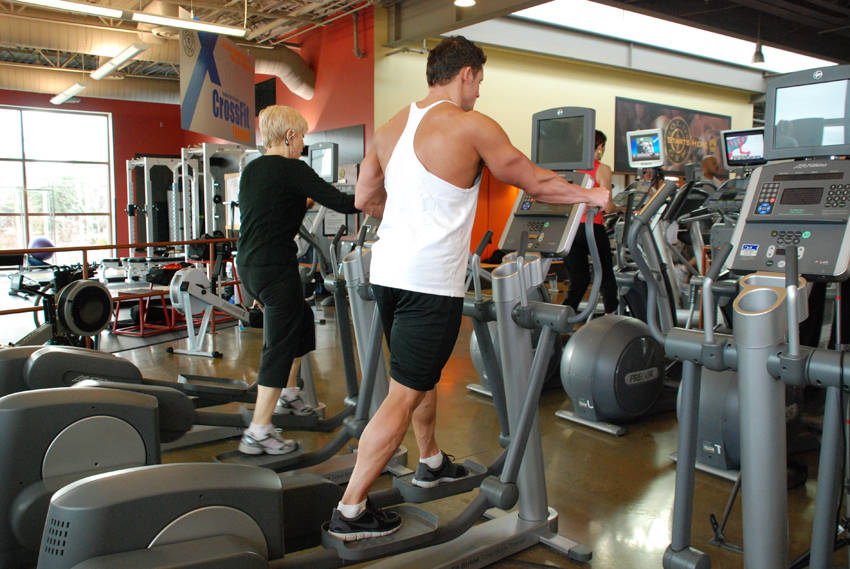
How to do it
- Step onto the pedals while holding the fixed handles, and start moving the pedals forward.
- Take the moving handles once the rhythm is smooth.
- Stand tall with the hips over the feet and the heels in contact with the pedals.
- Push and pull the handles in time with the legs, letting the legs do most of the work.
- Keep a steady pace for the planned time, adjusting resistance or incline to your target effort.
Tips
- Press through the heels to bring the glutes in more.
- Keep a light grip so the arms assist rather than drive.
Common mistakes
- Leaning on the handles and hunching forward.
- Rising onto the toes for the whole session.
- Resistance so low that momentum carries the pedals.
Muscles worked by the Elliptical
Share per muscle in the Zulta muscle model. The model spreads the load of one rep over 40 muscles, based on EMG and biomechanics research.
Handles move with the legs; the stride is flatter than a step. Repeated stepping up: glute max and quads extend the hip and knee, the calves push through the toes.
Elliptical alternatives
Same equipment
No equipment
Similar exercises
Frequently asked questions
What muscles does the Elliptical work?
Mainly the gluteus maximus and quads (vastus lateralis). The quads (vastus medialis), calves (gastrocnemius) and quads (rectus femoris) assist.
Is the Elliptical good for beginners?
Yes. The Elliptical is rated beginner in the Zulta library: the technique is easy to learn with a light weight.
What is a good alternative to the Elliptical?
For example the Elliptical Sprints, Versa Climber and Air Runner. They train mostly the same muscles.
Log your sets in Zulta
Zulta tracks your sets, weights and muscle load next to your running, riding or Hyrox training. The app opens soon.